
Why companies are betting big on transparent ESG
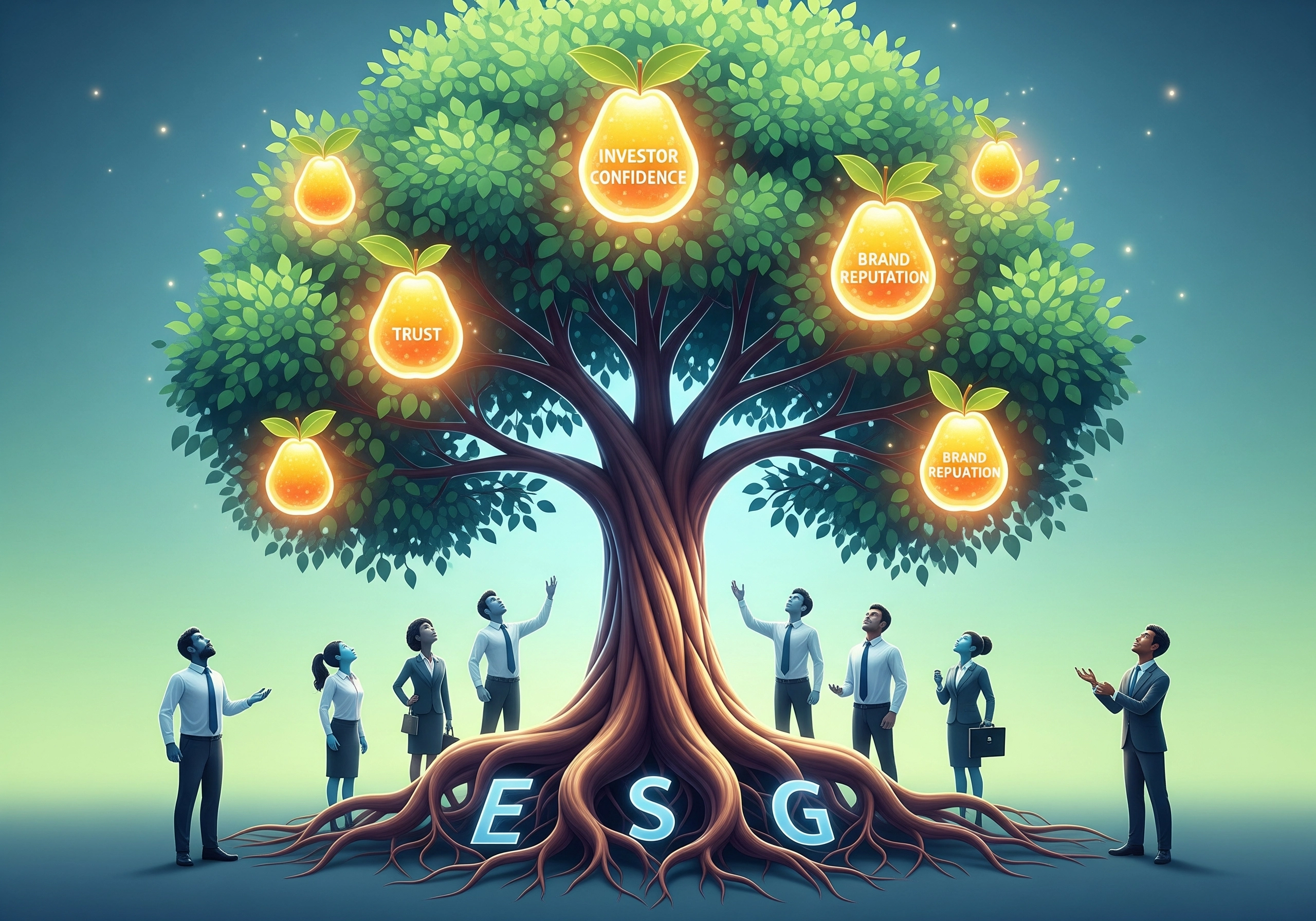
Is your company ready for a world where its sustainability claims are constantly scrutinized? That world is already here. More than 70% of investors now expect companies to integrate sustainability into their core business strategies, according to the PwC Global Investor Survey 2024. But it’s not enough to say you’re sustainable. You’ve got to prove it. That’s where corporate ESG verification and certification come in.
Why the sudden rush?
The rise of ESG isn’t just a trend; it’s a fundamental shift in how businesses operate and attract investment. Investors, from institutional giants to individual stakeholders, are demanding transparency and accountability. They aren’t just looking for profits; they’re assessing a company’s environmental impact, social responsibility, and governance practices. Short sentences can add punch. Longer ones can provide detail. This mix creates a natural rhythm. The market for ESG certification is booming, projected to reach trillions of dollars in the coming years. This isn’t a nice-to-have; it’s rapidly becoming a must-have. To learn more about its importance, consider exploring your entry point to ESG company verification.
Who needs to pay attention?
This isn’t just for the Fortune 500. Whether you’re a CEO, CFO, sustainability officer, or even a rising star in finance, understanding and, ideally, obtaining an ESG certificate is essential. It’s about building trust, mitigating risk, and attracting the capital you need to thrive. For companies, it means demonstrating a genuine commitment to sustainability, not just through marketing, but through verifiable actions. Without this verification, your claims might face skepticism, potentially leading to accusations of greenwashing. It’s a reality no business wants to face.
Unpacking corporate ESG verification: what’s the difference?
As investor and stakeholder attention grows, let’s clarify what corporate ESG verification truly entails. It’s more than just publishing a sustainability report; it’s about proving genuine commitment and gaining external approval. A polished report can make any company appear responsible, but ESG certification provides a crucial layer of accountability that builds real trust. It offers concrete proof, beyond mere marketing, that a company is acting responsibly across environmental, social, and governance factors.
Defining ESG Certification
At its heart, ESG certification is a process where an independent, third-party entity evaluates a company’s ESG performance against established standards. This evaluation can cover many areas, from carbon emissions and supply chain management to labor practices and board composition. The objective is to give stakeholders, investors, customers, and employees alike, a dependable measure of a company’s sustainability initiatives. It’s comparable to a financial audit, but applied to a company’s social and environmental footprint.
The Benefits of a Verified ESG Certificate
Why pursue ESG certification? The advantages are substantial. Firstly, it significantly boosts credibility. In an era where greenwashing is a growing concern, an ESG certificate from a respected organization signals authentic commitment. Secondly, it can improve access to capital. Investors increasingly rely on ESG ratings and certifications for their decision-making, and a strong certification can unlock funding opportunities. Thirdly, it enhances a company’s reputation and brand value, attracting both customers and top talent. Fourthly, it aids in ensuring compliance with evolving regulations, thereby mitigating risks and avoiding potential penalties. For example, the ESGPro Mastery Institute assists companies in navigating certifications like B Corp and GRI, connecting theoretical sustainability to investment-grade performance. If you’re beginning this process, this guide on what to expect with esg certification offers a useful starting point.
Certification vs. Reporting: A Key Distinction
It’s crucial to differentiate between ESG certification and ESG reporting. Reporting involves disclosing a company’s ESG performance data. Certification, however, goes further by requiring independent verification of that data, ensuring its accuracy and reliability. Many companies are now choosing certification to substantiate their commitments. This trend is especially noticeable among businesses seeking institutional investment or aiming to meet the expectations of increasingly informed consumers. For companies aiming to stand out in the competitive ESG space, a recognized ESG certificate is becoming nearly indispensable. To understand which certifications are most valuable for career advancement, exploring the best ESG certification courses is recommended.
The Takeaway
In the ESG domain, demonstrable actions carry more weight than mere statements. While reporting offers transparency, certification provides validation. It’s a direct method for companies to prove they are actively implementing sustainability practices, not just discussing them. For professionals, selecting the appropriate certification is also vital for career progression and establishing credibility. As an initial step, evaluate if ESG certification aligns with your career goals. It’s a strategic decision that can substantially elevate your professional standing and influence.
The undeniable market signal for verifiable sustainability
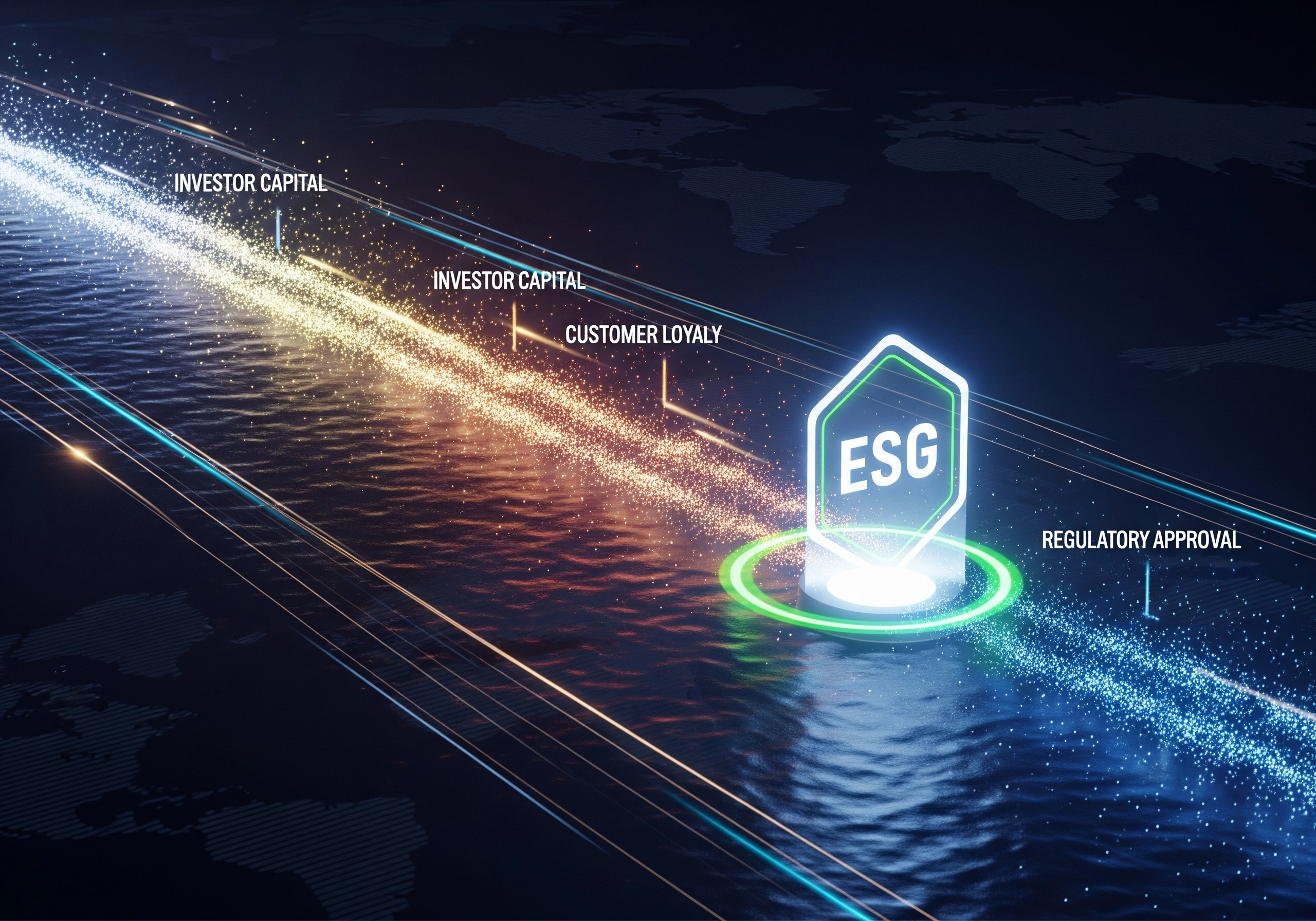
The market’s message is clear: verifiable sustainability isn’t a choice anymore. A 2024 PwC Global Investor Survey found that over 70% of investors want companies to weave sustainability into their main business plans. This matches the ESG market’s growth. It’s expected to top $3 trillion by 2033. This shows a definite move toward ESG factors in investment decisions. Research projects the global ESG certification market will actually go beyond $3 trillion by 2033. This highlights the need for certified sustainable methods. You can find out more about improving your credentials via ESG certification programs.
This is more than just completing tasks. It’s about building confidence when everyone’s watching more closely. Investor confidence in ESG matters a lot. But concerns about greenwashing are growing. Thomas Husson, a Principal Analyst at Forrester Research, noted, “while most U.S. consumers believe companies are responsible for the environment, only about one-third actually trust corporate sustainability commitments.” This “trust gap” needs third-party verification to close it. Companies like Keurig and Deutsche Bank’s DWS learned this the hard way. They paid fines for making false ESG claims. These examples show the consequences of not meeting the market’s demand for real, verifiable sustainability.
Companies such as Patagonia and Danone have accepted this. They pursued rigorous B Corp certification to prove their dedication. This level of deep operational integration, like Patagonia’s B Impact Assessment score of 166 (well over the 80-point minimum), builds investor confidence in ESG. It signals a long-term commitment. However, recent European Commission CSRD updates, which increase reporting requirements, might change the mandatory reporting scene. Some companies might delay their adoption because of this. For those needing help navigating this complex area, ESGPro Mastery Institute offers advice and certification support. We assist companies in boosting their ESG scores and drawing institutional investment. Our approach uses data-driven strategies and aligns with global standards. We help with ESG due diligence and reporting, supporting businesses as they build lasting enterprise value. Our focus is on concrete steps, not just empty phrases.
Charting your course to credible ESG standing
Building on the undeniable market demand for verified sustainability, let’s chart a course for your company to achieve credible ESG standing. You need verifiable proof, not just claims. This path involves several important steps, and I’ll lay them out practically.
Step 1: Define your materiality
First, you need a robust materiality assessment. What ESG factors genuinely matter to your business and stakeholders? This isn’t guesswork; it’s about understanding what impacts your financial performance and what your stakeholders care about. Frameworks like the GRI Standards or the SASB Standards can guide your assessment. This helps you focus on what’s truly material and avoid wasting resources on unimportant issues. Chasing certifications without focusing on the issues that matter most is often called “badge hunting,” and it’s a pitfall to avoid.
Step 2: Choose the right certification
Next, select a certification that aligns with your goals and audience. Are you a B2B supplier or a consumer-facing brand? B Corp certification may be a good fit if you’re a consumer-facing brand, while EcoVadis might be better for supply chain risk management. Don’t pick a certification just because it’s popular; choose the one that validates your specific sustainability efforts. In the Indian context, consider certifications that align with local regulations like BRSR. ESGPro Mastery Institute, for example, can advise on navigating the nuances of ESG certification, helping you choose the best fit for your business goals and compliance requirements. Also, be aware of recent news regarding the EU CSRD; it has changed reporting requirements, which may impact your certification strategy. For more details on effective strategies, you can explore resources on ESG sustainability certification.
Step 3: Prepare for the audit
Preparing for an ESG audit is a detailed process. Gather and verify data. Document your policies and procedures. Ensure you’re meeting the certification’s requirements. Transparency is vital. Show how your ESG initiatives are integrated into your core business strategy. A common challenge is data siloing, where ESG information isn’t integrated with financial data, unlike the comprehensive approach institutional investors expect.
Step 4: Ongoing improvement and reporting
Certification isn’t a one-time event; it’s an ongoing journey. Continuously improve your ESG performance, track your metrics, and report transparently. Stay updated on the latest standards and regulations. The CFA Institute‘s recent renaming of its “Certificate in ESG Investing” to the “Sustainable Investing Certificate” reflects the evolving global terminology. ESGPro Mastery Institute offers mentoring to help you bridge the gap between sustainability theory and investment-grade performance, helping you attract institutional investment. The goal is to build long-term enterprise value through data-driven strategies and compliance. You can learn more about the ESG certification process through our guides.
By following these steps, you can establish credible ESG standing, build trust with stakeholders, and position your company for long-term success. Contact ESGPro Mastery Institute to get started with your ESG certification process and to avoid common pitfalls. Remember, preparing for an ESG audit requires diligent work, but the rewards, increased trust, better investment opportunities, and a more sustainable business, are well worth the effort. Consider what ESG compliance certification can do for your business, and get started today. For further information, see the ESGPro Mastery Institute website.
The pitfalls no one warns you about

So, you’re ready to jump into ESG certification? That’s great! But before you get too far down the road, let’s talk about the potholes that often derail even the most well-intentioned efforts. I’ve seen them firsthand, and trust me, avoiding these pitfalls can save you a lot of headaches, and potentially, a PR nightmare. What most guides miss is that getting certified isn’t the finish line; instead, this marks the start of a journey that demands constant vigilance.
Beyond Superficial Certifications: Focusing on Real Change
One of the most common ESG mistakes is treating certifications as mere marketing badges. This can be a form of misleading claims, where companies display a logo or hire a sustainability officer without making fundamental changes. But if the underlying business model doesn’t change, you’re setting yourself up for trouble. We’ve seen this happen: the SEC fined Keurig for misleading claims about recyclability, and Deutsche Bank’s DWS was penalized for overstating its ESG credentials, demonstrating that public claims must correspond with actual investment processes 4.
To avoid this, focus on integrating ESG into your core operations. This means reassessing resource allocation, management systems, and your overall strategy. Think of Patagonia, a B Corp leader that uses its certification to institutionalize its values through leadership transitions 16. This is about deep operational integration, not just surface-level changes. Our services help companies do just that, offering mentoring and consulting that bridges the gap between sustainability theory and investment-grade performance. We focus on areas like ESG due diligence and transformation, ensuring that your efforts translate into tangible results.
Data Siloing And Assurance Gaps
Another frequent issue is data siloing. I’ve seen too many organizations house their ESG data within PR or marketing departments, separated from the finance team. This leads to gaps in assurance, where reported metrics aren’t verified to the same standards as your financial data. Our data-driven strategies help companies integrate ESG goals into daily operations and ensure that data is reported with the same rigor as financial information. A World Economic Forum survey found that 48% of companies cite a lack of employee engagement as a major challenge, often because ESG goals aren’t integrated into daily operations 13.
The Importance Of Long-Term Commitment
Remember, ESG certification isn’t a one-time event. Rather, it’s a continuous journey. As Larry Fink, CEO of BlackRock, emphasizes, this is about building “mutually beneficial relationships” 6. By avoiding these common pitfalls and focusing on genuine operational change, you can build a credible ESG program that attracts institutional investment and creates long-term value. Let’s make sure your ESG journey is one of lasting impact.
Ready to get started? Contact us for a consultation. You can also review our ESG certification and ESG certification courses to boost your credentials and take the first step toward a more sustainable future.
Beyond the certificate: fostering genuine impact
So, you’ve earned that certification. That’s a good start! But really, it’s just the beginning. The actual work starts now. I’ve seen too many companies treat ESG certification like an endpoint, a marketing trophy, instead of a driver for ongoing ESG improvement. We need to shift the focus from merely obtaining the credentials to truly creating impact.
Integrate, don’t isolate
Most guides miss the importance of deep operational integration. Just having a sustainability report isn’t enough; you’ve got to weave ESG principles into every part of your business. Think about it: do your performance reviews reflect your ESG goals? Do your procurement processes favor sustainable suppliers? Are you actively tracking and managing your carbon footprint? If you’re not doing these things, you’re missing the main point. At ESGPro Mastery Institute, we stress integrating ESG considerations into your core business strategy. This aligns with a key finding from the PwC Global Investor Survey 2024. 15
The power of measurement
One of the biggest errors I observe is a lack of strict measurement. You can’t improve what you don’t measure. You must set clear, measurable, achievable, relevant, and time-bound (SMART) goals across all ESG areas. Then, you’ll need solid data collection and analysis systems. This means putting money into the right tools and expertise. And remember, it’s not just about tracking data; it’s about using that data to guide decisions. Are you using data-driven ESG strategies to attract institutional investment? We at ESGPro Mastery Institute help clients implement these kinds of strategies to boost their ESG scores.
Culture matters
Culture eats strategy for breakfast, right? Sustainability isn’t just a directive from the top; it needs to be adopted at every level of your organization. This involves educating and empowering your employees. It also means building a culture of transparency and accountability. And that requires creating an environment where people feel safe to voice concerns and suggest improvements. A lack of employee engagement is a major hurdle, according to a World Economic Forum survey. 13 That’s why we at ESGPro Mastery Institute focus on connecting sustainability theory with investment-grade performance, helping companies align their workforce around shared sustainability goals.
Resources for sustained excellence
The field is always changing. Regulations shift, best practices emerge, and what stakeholders expect changes. That’s why you need to stay informed and keep improving. Consider investing in continuous sustainability training for your team. For instance, the CFA Institute officially changed the name of its “Certificate in ESG Investing” to the “Sustainable Investing Certificate.” This better reflects the evolving global terminology and market expectations. 29 You can learn more about these changes and how they impact your professional development in our article on 2025 CFA ESG Certification Updates. Use resources like ESGPro Mastery Institute‘s mentoring programs and advisory services to stay ahead. Don’t hesitate to seek outside expertise to help you navigate ESG’s complexities. We provide ESG due diligence, transformation, and reporting services. Our focus on data-driven strategies and adherence to global standards, like GRI and BRSR, helps build long-term enterprise value.
Ultimately, ESG certification is a journey, not a final stop. It’s about building a better business that creates lasting value for everyone involved. Ready to move past the certificate and embed real, measurable impact into your operations? Contact ESGPro Mastery Institute today to get started. https://esgproinvest.com/
A future built on verifiable trust

Building a corporate sustainability future means recognizing that verifiable trust isn’t optional; it’s the foundation. We’ve seen how important ESG verification is for attracting investment and building lasting value. But what does this mean in practice? How do you ensure your company is ready for the long haul?
The long game of trust
ESG isn’t a quick win; it’s a commitment. It’s about more than ticking boxes. It’s about demonstrating genuine care for the environment, your employees, and the communities you operate in. The companies thriving in this new landscape are those that integrate ESG principles into their core business strategies. BlackRock’s Larry Fink has emphasized this. It’s a message that resonates deeply with investors, as over 70% state that companies should incorporate sustainability directly into their core business strategy 15.
Where to begin
So, where do you start? Focus on a few key areas.
First, conduct a thorough materiality assessment. Identify the ESG issues most relevant to your business and stakeholders. Second, develop a data-driven strategy. This means setting measurable goals, tracking progress, and being transparent with your reporting. This is where ESGPro Mastery Institute can help. They bridge the gap between sustainability theory and investment-grade performance. Their approach to ESG due diligence and transformation delivers precisely this kind of value. You can learn more about their offerings, including specific guidance on online ESG certification, on their website.
Beyond the buzzwords
The market is rapidly evolving. Regulations like the EU CSRD are reshaping the playing field. To stay ahead, you need to be proactive. That means continually refining your approach, staying informed about the latest standards, and investing in the right expertise. While there are plenty of online ESG certification courses, make sure you choose one that’s recognized and delivers tangible results.
By taking these steps, you’ll be well-positioned to build a business that not only survives but thrives in a world that values verifiable trust. To secure your company’s sustainable future and attract the investment it deserves, explore ESGPro Mastery Institute’s services and certification programs at their contact page today. The long-term value of ESG verification benefits is undeniable. The time to act is now.
Tired of greenwashing accusations? Build real investor confidence with credible ESG verification. Explore how ESGPro Mastery Institute can guide your company’s journey to robust ESG performance.
People Also Ask
What’s the real difference between ESG reporting and ESG certification?
ESG reporting is about disclosing your company’s environmental, social, and governance data. Certification, on the other hand, involves an independent third party verifying that your reported data and underlying practices meet specific standards. It’s that verification that builds genuine trust, unlike just reporting claims.
Why are investors so concerned about greenwashing?
Investors are increasingly wary of greenwashing because it erodes trust and can lead to significant financial and reputational risks. With so many companies making sustainability claims without robust proof, like the DWS case, investors need verifiable ESG credentials to make informed decisions. It’s about separating genuine commitment from marketing fluff.
How can a company prepare for ESG certification?
Preparation involves several key steps: first, understand which ESG standards are most relevant to your industry and stakeholders. Then, gather and organize your ESG data, ensuring it’s accurate and accessible. It’s also crucial to integrate ESG considerations into your core business strategy, not treat it as a side project. You can learn more about bridging this gap at the ESGPro Mastery Institute.
Is B Corp certification the only option for ESG verification?
No, B Corp is a well-known holistic certification, but it’s not the only one. Other frameworks like EcoVadis focus more on supply chain management, and specific standards exist for environmental management (ISO 14001) or financial materiality (SASB FSA). The best choice depends on your company’s specific goals and industry.
What are the biggest mistakes companies make when seeking ESG certification?
A major pitfall is ‘badge hunting,’ where companies pursue certification purely for marketing without making real operational changes. Another common mistake is data siloing, keeping ESG information separate from financial data, which hinders independent verification. Genuine commitment requires integrating ESG into daily operations, not just displaying a logo.
How does ESG certification help attract institutional investment?
Institutional investors, managing trillions, actively seek companies with strong ESG performance because it signals lower risk and long-term value creation. Verifiable ESG credentials, like those from a certification, provide the assurance they need that a company’s sustainability claims are legitimate and backed by solid practices, making it easier to attract their capital.
Discover more from ESGPro Mastery Institute
Subscribe to get the latest posts sent to your email.