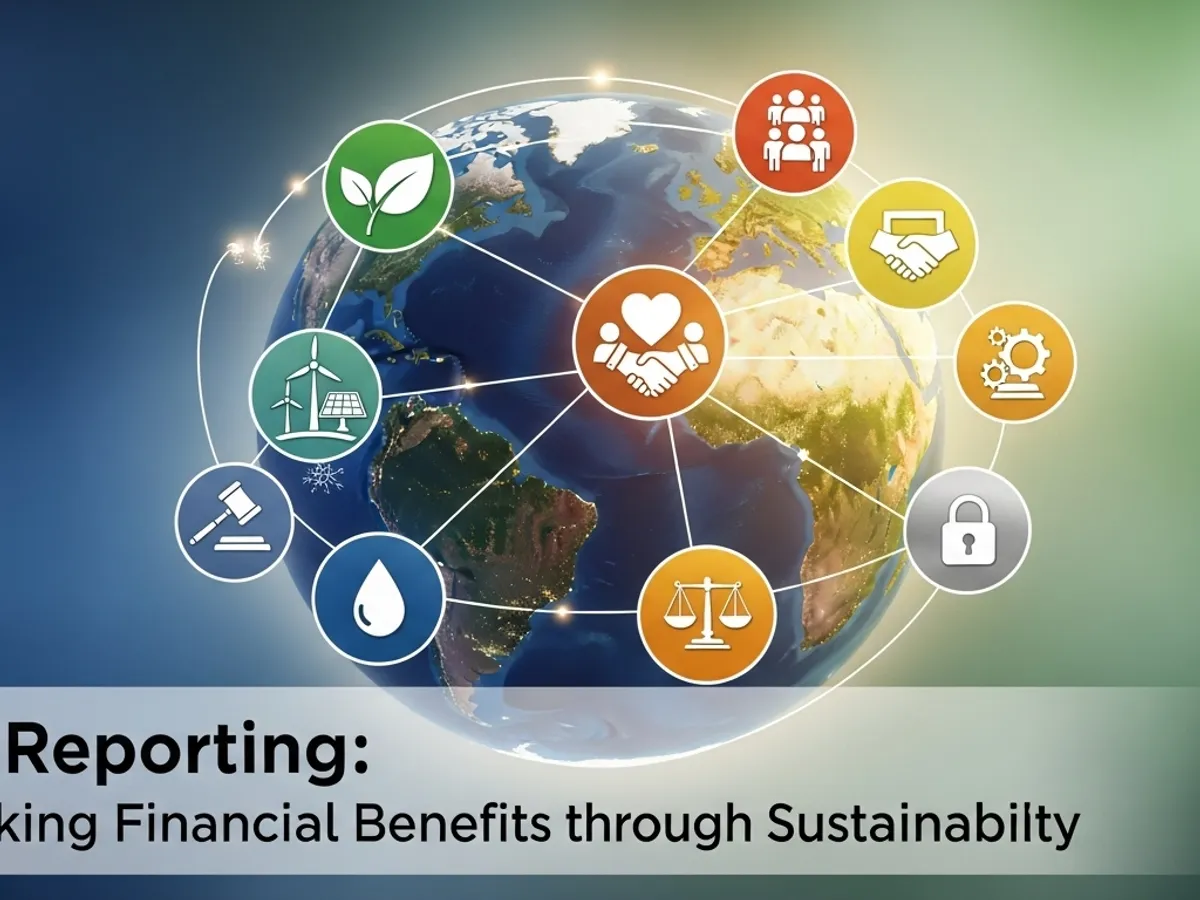
- Introduction: The Rising Importance of ESG and Financial Performance
- Integrating ESG Metrics for Enhanced Investor Relations and Stakeholder Engagement
- The Financial Benefits of ESG Reporting: Driving Corporate Financial Performance
- ESG Reporting Strategies: Key Components and Best Practices
- The Role of Transparent Business Practices in Enhancing ESG Value
- Conclusion: Embracing ESG Reporting for a Sustainable Future
- Quick Summary
- FAQs
- Additional Resources
Introduction: The Rising Importance of ESG and Financial Performance
In today’s rapidly evolving business landscape, the convergence of Environmental, Social, and Governance (ESG) factors with traditional financial reporting is reshaping how companies operate and communicate their value. Investors, regulators, and consumers are increasingly demanding transparency and accountability, compelling companies to integrate ESG considerations into their financial reporting practices. This shift isn’t merely a trend but a fundamental change in how businesses operate and communicate their value. This blog delves into the significance of ESG reporting, exploring the latest trends, essential standards, and frameworks that shape its implementation. We will uncover the hidden financial benefits of ESG, examine effective ESG reporting strategies, and emphasize the importance of transparent business practices in today’s world.
Integrating ESG Metrics for Enhanced Investor Relations and Stakeholder Engagement
Transparency in reporting ESG metrics fosters stronger relationships between companies and their investors. By clearly communicating sustainability efforts and progress through comprehensive reporting, companies build trust. This trust can lead to more stable investment flows and a more engaged shareholder base, motivating companies to improve their ESG practices. Strong investor relations are crucial for building confidence. According to research from SBN Software, transparency in ESG metrics fosters stronger relationships between companies and their investors. By clearly communicating their sustainability efforts and progresses through comprehensive reporting, companies are able to build trust with their investors, leading to more stable investment flows and a more engaged shareholder base.

Building Trust Through Transparent ESG Reporting Procedures
Openness about ESG performance and reporting procedures helps building confidence with investors and stakeholders. There isn’t a single strategy for building trust and transparency in investor relations, and enterprises should work closely with their investors to understand their communication needs and how frequently they require updates. Businesses that prioritize ESG reporting and openness can gain better stakeholder engagement, enhanced reputation, and reduced risk. ESG reporting informs stakeholders, including investors, customers, employees, and regulatory agencies, about an enterprise’s ESG performance and practices. A study highlighted by IFS indicates that as stakeholders increasingly demand transparency and accountability, understanding ESG reporting has never been more critical. This involves disclosing data related to environmental, social, and governance performance metrics, systematically presenting information to offer a clearer view of a company’s sustainability efforts and achievements.
Leveraging ESG for Better Market Reputation and Stakeholder Trust
Businesses that create robust ESG reporting and cement strong investor relations enjoy better market reputations and the trust of their stakeholders. ESG reporting empowers stakeholders to make knowledgeable decisions about a company’s ESG risks and opportunities and its sustainability performance. Businesses need to view ESG reporting as an integral part of their investor relations management as ESG reporting steadily moves toward becoming mandatory. Investors are increasingly concerned with the impact they want to create with their investment, continuing to propel the ESG momentum. For expert guidance, consider exploring ESG consulting services to help your business develop robust ESG reporting and strengthen investor relations.
The Financial Benefits of ESG Reporting: Driving Corporate Financial Performance
Integrating ESG metrics in valuations is actively shaping corporate strategies. Companies recognize that positive ESG performance can lead to better access to capital, lower borrowing costs, and enhanced reputational benefits, contributing to improved financial performance. For instance, a company that invests in sustainable practices may reduce costs associated with environmental impact and improve its bottom line. Strong ESG practices can lead to improved financial performance by reducing costs, mitigating risks, and attracting sustainable investors. According to iriscarbon.com, strong ESG practices can lead to improved financial performance by reducing costs, mitigating risks, and attracting sustainable investors.

Linking Environmental Reporting to Financial Performance
Environmental reporting has become a cornerstone of corporate strategy, with substantial implications for financial performance. Companies that prioritize environmental sustainability and transparently report their performance often experience significant financial benefits. Firms with comprehensive ESG strategies tend to experience lower capital costs, enhanced reputation, and improved operational efficiency. Preliminary findings suggest a positive correlation between robust ESG reporting and long-term financial performance. A study from ResearchGate supports this, highlighting that companies prioritizing environmental sustainability and transparent reporting often experience significant financial benefits, including lower capital costs and enhanced reputation.
ESG Integration for Innovation and Risk Management
Integrating ESG practices into corporate strategy involves setting clear goals, embedding ESG metrics in decision-making, and fostering a sustainability-oriented culture. This holistic approach enables companies to create value for all stakeholders while addressing the pressing challenges of our time. ESG can drive innovation and create new business opportunities. By identifying and addressing ESG risks, companies can protect their long-term value. Companies that prioritize environmental sustainability can mitigate various risks associated with climate change and regulatory compliance, reducing the likelihood of facing penalties, lawsuits, or damage to their reputation. To effectively integrate ESG, consider sustainable business practices to enhance stakeholder engagement and ensure transparent decision-making.
ESG Reporting Strategies: Key Components and Best Practices
ESG reporting involves disclosing data related to a company’s performance in three key areas: environmental, social, and governance. This reporting has gained traction as stakeholders seek transparency about how companies manage risks and opportunities in these areas. Key components of ESG reporting include metrics on carbon emissions, waste management, employee diversity, community engagement, and board diversity. By systematically presenting this information, companies can offer a clearer view of their sustainability efforts and achievements.

Meeting Sustainability Goals and Demonstrating Authenticity
Reporting is an effective way to demonstrate that you’re meeting goals and that your ESG projects are genuine, not just greenwashing, empty promises, or lip service. The financial benefits of ESG are only realized through authentic action. Since ESG reports summarize the qualitative and quantitative benefits of a company’s ESG activities, investors can screen investments, align investments to their values, and avoid companies with the risk of environmental damage, social missteps, or corruption. Investors require assurances that companies avoid conflicts of interest in their choice of board members and senior executives, in addition to not using political contributions to obtain preferential treatment or engage in illegal conduct. For strategies on effective ESG reporting, explore effective ESG reporting strategies to enhance transparency and improve decision-making.
ESG as an External Investment Framework
ESG is an external investment framework or a form of metrics that helps companies communicate their initiatives, and investors assess the company’s performance and risk. Sustainability, on the other hand, is seen as an internal framework that guides the organization’s capital investments. Sustainability is the motivation, while ESG is the reported outcome. Many organizations are rejigging their business models, reorganizing corporate structures, and spending substantial time, money, and resources to embed sustainability into core strategies. Wolters Kluwer highlights that ESG serves as an external investment framework, aiding companies in communicating their sustainability initiatives and enabling investors to assess performance and risk.
The Role of Transparent Business Practices in Enhancing ESG Value
Transparent business practices play a pivotal role in enhancing the value derived from ESG initiatives. Companies that openly communicate their environmental, social, and governance efforts are more likely to build trust with stakeholders. This trust translates into tangible benefits, including improved investor relations, enhanced brand reputation, and reduced operational risks.

Identifying and Mitigating Risks Through ESG Reporting
Companies can identify and mitigate risks from ESG challenges, transforming sustainability insights into tangible financial advantages and enhancing investor appeal. An ESG report that includes data on carbon emissions, energy consumption, and climate-related policies allows organizations to anticipate and manage these risks effectively. Leveraging ESG factors as drivers of long-term value, companies can align their operational and strategic choices, mitigating risks and capitalizing on new opportunities. According to Fintech Global, ESG reporting enables companies to identify and mitigate risks from ESG challenges, transforming sustainability insights into tangible financial advantages and enhancing investor appeal. To learn more about actionable strategies, consider ESG investment benefits for long-term value creation and ethical practices.
Fostering Long-Term Success Through Strategic Planning
Integrating insights from ESG reporting into strategic planning fosters long-term success and resilience, preparing organizations to adapt and thrive in a rapidly changing global business environment. ESG reporting is a strategic asset that empowers organizations to identify risks and leverage opportunities, thus driving operational efficiency, enhancing stakeholder relations, and supporting robust strategic decision-making. The growing importance of sustainability reports is because investors and other stakeholders are calling on companies to disclose more information about their sustainability activities and environmental, social, and governance strategies. PwC emphasizes that sustainability reporting is crucial as investors and stakeholders demand more information about companies’ sustainability activities and ESG strategies. For insights into mastering ESG principles, see ESG principles to transform your business success and enhance corporate responsibility.
Conclusion: Embracing ESG Reporting for a Sustainable Future
In conclusion, the financial benefits of ESG reporting are substantial and multifaceted. By adopting comprehensive ESG reporting strategies and embracing transparent business practices, companies can enhance their financial performance, strengthen investor relations, and contribute to a more sustainable future. As ESG continues to gain prominence, businesses that prioritize these factors will be best positioned for long-term success and resilience.
Quick Summary
Comprehensive ESG reporting offers significant financial benefits by enhancing investor relations, improving financial performance, and fostering transparent business practices. Companies that integrate ESG metrics into their strategies can attract sustainable investors, reduce operational risks, and enhance their brand reputation. Embracing ESG is not just a matter of compliance but a strategic move towards long-term value creation and sustainability. The key components of effective ESG reporting include environmental, social, and governance metrics, which enable stakeholders to assess a company’s resilience and potential for future growth. By prioritizing transparency and accountability, businesses can build trust with investors and stakeholders, leading to more stable investment flows and a more engaged shareholder base.
FAQs
How does ESG reporting contribute to improved financial performance?
ESG reporting can lead to improved financial performance by reducing costs, mitigating risks, attracting sustainable investors, and enhancing a company’s reputation.
What are the key components of an effective ESG reporting strategy?
The key components of an effective ESG reporting strategy include metrics on environmental impact (e.g., carbon emissions), social responsibility (e.g., employee diversity), and governance practices (e.g., board diversity).
Why is transparency important in ESG reporting?
Transparency in ESG reporting is crucial for building trust with investors and stakeholders, fostering stronger relationships, and ensuring that companies are held accountable for their sustainability efforts.
How can companies ensure the accuracy and reliability of their ESG data?
Companies can ensure the accuracy and reliability of their ESG data by implementing robust data collection processes, conducting regular audits, and seeking third-party verification. Streamlining data collection is critical; to learn more, explore streamlining ESG data collection and its impact.
What role does investor relations play in ESG reporting?
Investor relations play a critical role in ESG reporting by communicating a company’s sustainability efforts and progress to investors, addressing their concerns, and building confidence in the company’s long-term value.
ESGPro Mastery Institute is an Indian company providing ESG certification and advisory services. They offer mentoring and consulting that bridges the gap between sustainability theory and investment-grade performance. Improve your ESG scores with ESGPro Mastery Institute.
Additional Resources
- What impact does Sustainability Reporting have on investor relations?
- ESG Reporting & Investor Relations: Building Trust & Transparency
- (PDF) The Impact of Environmental, Social, and Governance (ESG…
- ESG Reporting: Impacts, Benefits and Challenges, ResearchGate
- ESG and Financial Reporting: Shaping the Corporate Landscape
- The Impact of ESG Framework on Stakeholder Engagement and…
- What is ESG Reporting? A comprehensive guide | SAP
- What Is ESG Reporting? A Comprehensive Guide, IFS
- The ABCs of ESG reporting: What are ESG and sustainability reports…
- How ESG reporting strengthens stakeholder relations and strategic…
- Environmental, Social, and Governance (ESG) Investing: What It Is…
- ESG Reporting Services | PwC, US
- How does environmental, social, and governance (ESG…
- ESG reporting and preparation of a Sustainability Report, PwC
- What is the difference between CSR and ESG?
- Impact of ESG performance on firm value and profitability
- Environmental transparency and performance: Does the corporate…